

By Daphne Ewing-Chow
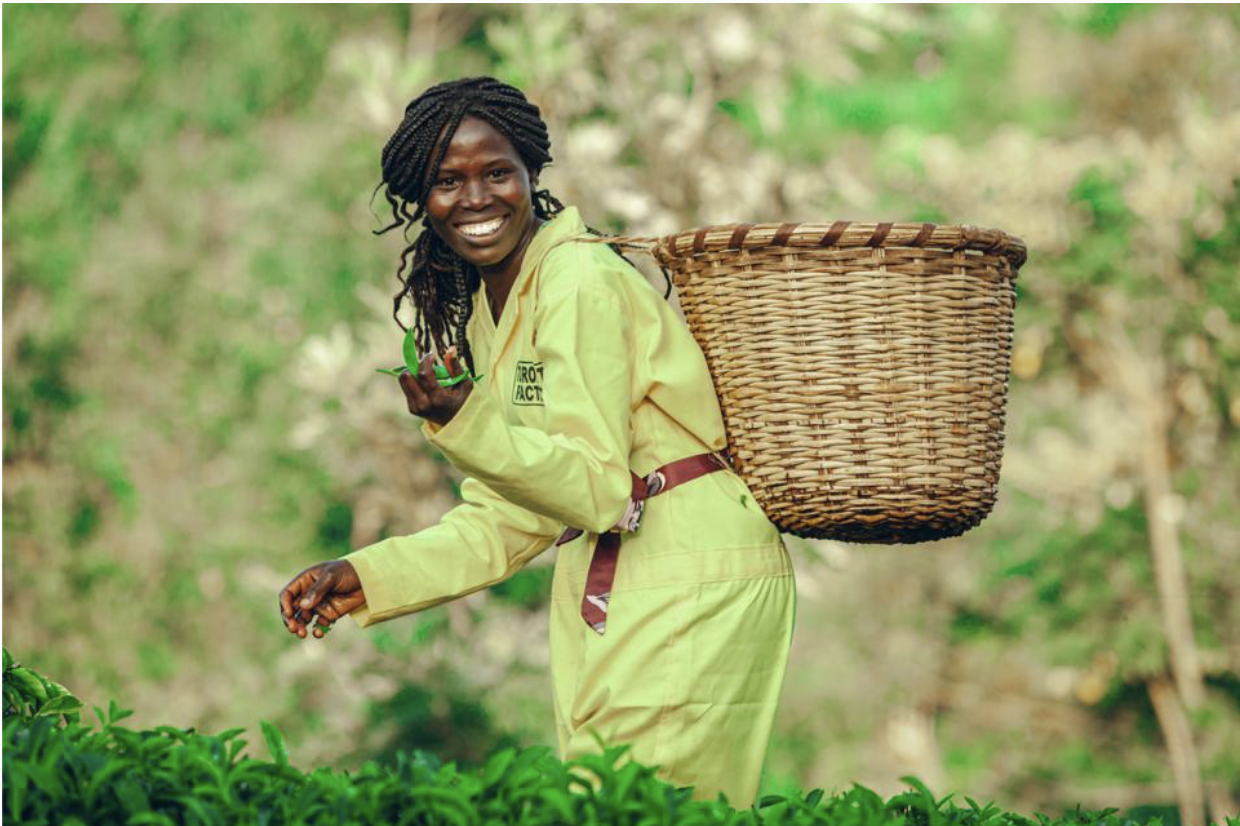
Jackline Cherono walks in from tending to her acre of tea in Ainamoi, a settlement in Kenya's Kericho County where she works as a lead farmer. The lettering, “Toror Tea Factory” embroidered on her iridescent yellow jumpsuit pops out against the vibrant greens of dense Camellia sinensis leaves.
Jackline’s confident, wise and upbeat personality disguises the burden of grief that she has carried since the loss of her father to leukemia and her mother to high blood pressure just a few years ago. The death of both of her parents to non-communicable diseases was life-changing, giving Jackline no choice but to prematurely conclude her studies at Jomo Kenyatta University, where she had been studying public health. She had financial obligations at home.
“My siblings need me,” she says, wiping away tears.

Jackline is among many people in Kericho County whose lives have been turned upside down by health issues. For those who understand the context, the irony is blatant.
I look around… The richness of the vegetation, this beautiful, committed farmer, the snap-snap-snap of the photographer adjacent to me— I feel like I’m on the luxe set of a behind-the-scenes exposé on how the world’s most popular drink has made its way from the farmlands of Kericho to the sitting rooms of British aristocracy.
But this is instead a story of struggle that carries with it a stain of malnutrition and health crisis— a dim reality cast against the backdrop of a prosperous and thriving industry.
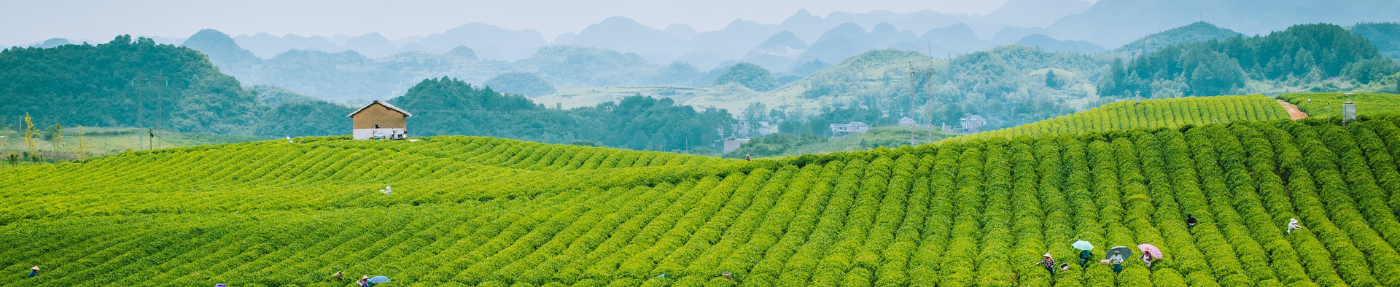
With the majority of export production originating here, Kericho is Kenya’s tea capital. And given that Kenya is the world’s largest black tea exporter, claiming a whopping 31.9% of the export market, it wouldn’t be far-fetched to refer to it as the black tea capital of the world.
Taylor’s of Harrogate most notable product, Yorkshire Tea, voted the best cup of tea by Brits in 2021, is made of tea leaves farmed in Kericho as does Twinnings’ robust English Breakfast Black Tea. In fact, most of the world’s most popular black teas contain the distinctly robust flavor of tea grown in the tea fields of Kericho.
But just as Brits enjoy a warm cup after a healthy meal, some thousands of miles away, Kenyan tea farming families are disproportionately malnourished, with high rates of non-communicable diseases and childhood stunting.
Pressure from foreign markets on the east African country’s tea production have created a race to the bottom, with smallholder farmers trying to create economies of scale by devoting their small plots almost exclusively to tea. The public health burden experienced by tea farmers, tea workers and their families— primarily women and children— has become the unintended consequence of Kenya’s economic dependence on the globally competitive commodity.
“The community in this area… When they wake up they go for tea plucking, tea weeding, tea planting… In a day, almost 6 to 8 hours is spent on the tea farm,” explains Benjamin Kimetto, the County Health Officer at the Department of Health in Kericho. “That has created a challenge because there has been no priority placed on other crops like food crops… A young mother with a kid under the age of five typically feeds that child tea or porridge without any other mix. When a parent feeds a child that way for three or more months, it will create a nutritional challenge.”
Data from Kenya’s Demographic and Health Survey (2014) reveals that stunting, or low height-for-age among children— one of the primary indicators of malnutrition— is 26% nationally, with close to 30% stunting among children who live in rural areas, as compared to less than 20% in the country’s urban areas, and up to 36% in the country’s tea producing regions.
In Kericho county alone, almost 29% of all children are stunted, with data revealing that more than half of children are not consuming iron-rich foods.
As the country’s leading foreign exchange earner, contributing to 23% of Kenya’s total foreign exchange earnings and supporting the livelihood of over 5 million people, Kenya’s tea sub-sector feeds the country’s economy while simultaneously fostering inequality that comes at the expense of the food security of those directly involved in its production.
But change is underway. In no small part due to Jackline herself.
Spider plant… spinach… black nightshade… sukuma (kale)… capsicum… onions… vine nderema (spinach)… tree tomato… avocado… maize… bananas… a variety of herbs… Jackline winds her way through the vegetation, pointing out multicolored food crops that paint a vibrant picture of health across the one acre plot on which her kitchen garden and tea farm coexist.
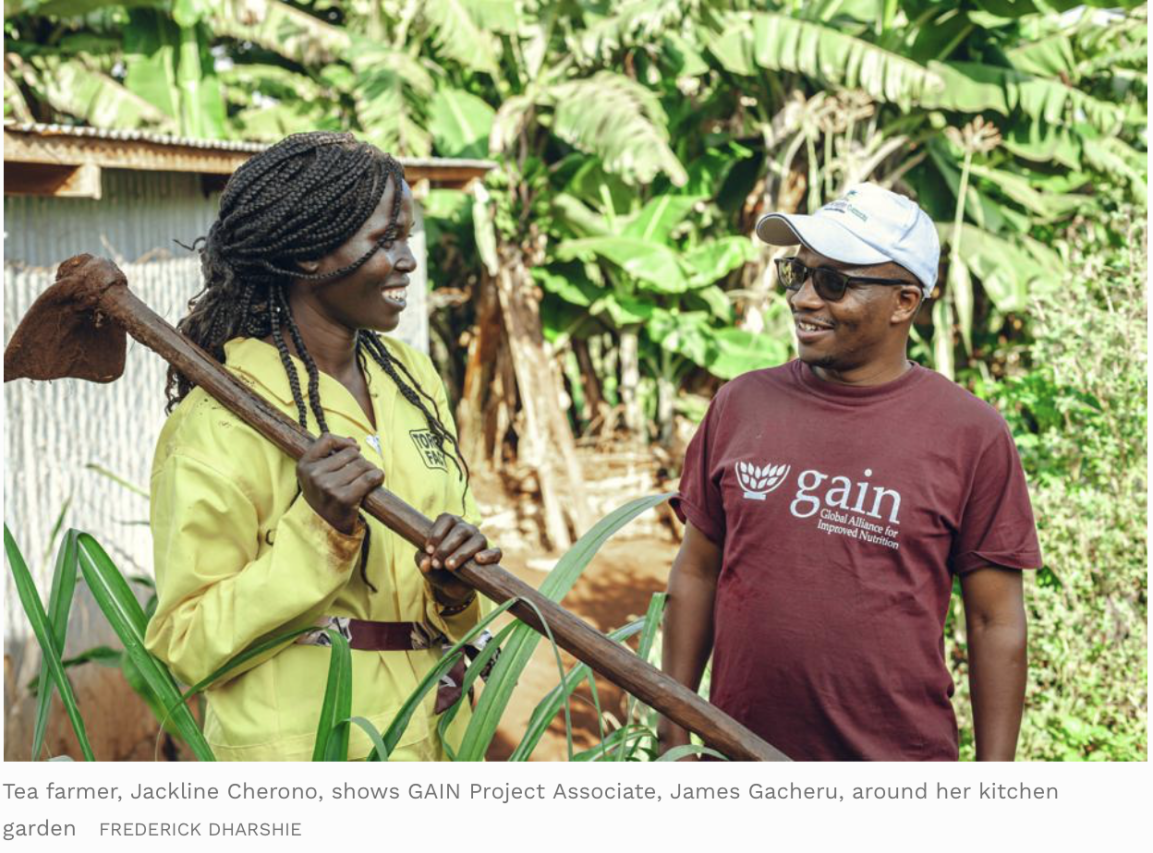
Kitchen gardens and healthy cooking have become all the rage in Kericho these days, thanks to a local initiative that has been helping to curb malnutrition and improve health indicators among Kericho’s tea workers.
In 2020, the Kenya Tea Development Agency Foundation (KTDA-F) partnered with Swiss-based NGO, the Global Alliance for Improved Nutrition (GAIN) and the Ethical Tea Partnership (ETP), with funding from private sector entities including Taylor’s of Harrogate and Twinnings, on what is known as the ‘TEAFAM” (Tea farming Families) project, part of GAIN’s Healthy Diets for Tea Communities programme. The project is a continuation of a Dutch-funded programme that began in 2018.
“We have been trying to create demand for healthy diets among small scale tea farmers within the catchment areas,” says Caroline Aurah, a Project Manager at GAIN. “There is great need to generate nutritional awareness in these communities.”
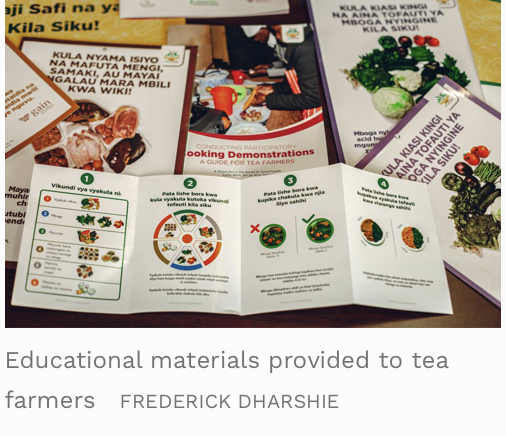
The TEAFAM project is improving the nutrition and health status of tea farmers and workers in Kericho by introducing more diversity to their diets through nutritional education, cooking demonstrations and kitchen gardening and composting, among other nutrition interventions.
(Download from www.forbes.com)